About
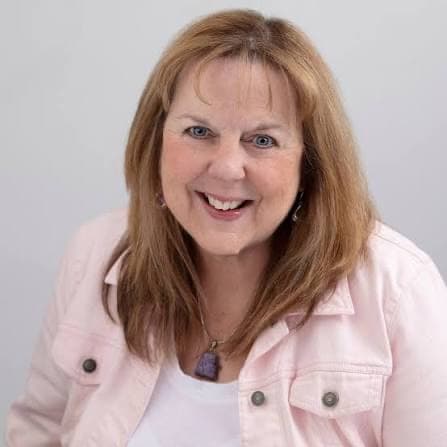
This is Laura Bass
I’m a psychotherapist in Charlotte, North Carolina. I work with adults, couples and families, and I have worked in residential, hospital and private-practice settings.

Her story
How I got here
At the age of ten, and the youngest of three children, my parents divorced. Several of my family members were in helping professions — my father had his MSW, and my grandmother had a degree in Guidance and Counseling. By high school I already knew I wanted to help people, so I studied psychology at the University of North Carolina.
After graduation I was lucky enough to work at Alexander Children's Center as a cottage counselor, living in with emotionally disturbed children. I met my future husband there, and we went to social work graduate school together at the University of South Carolina, where I graduated in 1985.
I returned to Charlotte, where we had two sons. I worked in substance abuse before becoming a family therapist on the adolescent unit at Charter Pines for three years. There I received the Ann Brown Award for my significant contribution to mental health.
In 1991 I began my private practice at Charlotte Psychiatric Associates, and my work there expanded to include couples therapy — which is rewarding to me, since I am a child of divorce myself.
By 1998 I had branched out into my own individual practice, only to develop chronic fatigue syndrome. Four years after being advised it would eventually go away, I began my journey into alternative and complementary health. That expanded my knowledge into the mind, body and spirit connection, and I began learning how emotional issues can affect a person's physical health. It led me to the Haden Institute, where I worked on my certification in Spiritual Direction in early 2011.
Laura lives in Charlotte with her husband, and they have two grown sons.

Choosing a therapist is largely about whether you can talk to them.
In the room
What makes my practice different
There isn't one size that fits all in relationship counseling. I use my years of experience to work out which practices and habits are worth pursuing to bring you to the result you want: deeper relationships with yourself, with everyone and with everything.
That might mean learning to ground, meditate or journal. It might mean traditional counseling methods, which involve opening up and sharing what you actually feel. It might mean learning to release inherited or trapped emotions so that you feel lighter and more at peace.
Together we work out the underlying issues behind your disconnection from yourself and others, so that you can live in a more awakened but calmer state — and then work out the best course of action.
Releasing trapped emotions is an idea from the Emotion Code and related energy work. It is a belief of those practices, not an established clinical or medical mechanism, and including it is always your choice.
I am interactive rather than silent. I ask questions, offer a view when I have one, and will say when something looks worth going into. If a different kind of support would serve you better, I will say that too.
Career
Where I have worked
Live-in cottage counselor, Alexander Children's Center
- 1985:
MSW, University of South Carolina
Substance abuse services, Charlotte
Family therapist, adolescent unit, Charter Pines Hospital (three years)
- 1991:
Began private practice at Charlotte Psychiatric Associates, adding couples therapy
- 1998:
Established an independent practice
- 2000:
Founding member, Arboretum Behavioral Health Associates
- 2011:
Studied Spiritual Direction at the Haden Institute
- 2017:
Joined Cameron Valley Associates
- 2020:
Began working remotely
- 2024:
Opened a part-time office at The Healing Cottage, Columbus NC
What you can expect

Autonomy
Laura offers several ways of working and explains what each involves. What actually forms part of your sessions is your decision, discussed openly rather than assumed.
The whole person
Laura works with mind, body and spirit. Spiritual and energy work is offered alongside psychotherapy, explained plainly, and never presented as medical treatment.
Honest expectations
Therapy can help you understand things and change what you do next. It cannot guarantee a particular feeling by a particular date, and this site will not tell you otherwise.
Confidentiality
What you say stays in the room, and the narrow legal limits on that are explained at the start — in conversation, not buried in a form you did not read.
Background
Training and education
Education
- BA, Psychology
University of North Carolina at Chapel Hill - MSW
University of South Carolina, 1985
Mind, body and spirit
Spiritual and energy training
I list these alongside my clinical qualifications. They are not healthcare licenses, and the work they relate to is not medical treatment.
- Certified Emotion Code practitioner
- Spiritual Direction studies, the Haden Institute
- Ordained Minister, Alliance of Divine Love
- Three levels of Reiki attunement
- Incan Peruvian energy work
- Mentored in chakra balancing (Four Winds School / Serena School lineage)

Mind, body and spirit
Working with the whole person
I work with the whole person: mind, body and spirit. Alongside psychotherapy, I offer spiritual and energy work, and you decide how much of it, if any, becomes part of our work together. It is not medical care and not a substitute for medical or mental-health treatment.
Insurance
In network with several major insurers
Being in network is not the same as your particular plan covering a particular service. Deductibles, copays and session limits differ from plan to plan, so please check your mental health benefits with your insurer before your first appointment — or call 704-706-3264 and ask.
- Aetna
- Anthem Blue Cross Blue Shield
- Blue Cross Blue Shield
- United Healthcare
- United Behavioral Health
- MedCost
- Magellan
- Carelon Behavioral Health (formerly Beacon Health Options)
- CBHA
- Medicare
Getting started
Talk it through
Choosing a therapist is largely about whether you can talk to them, and a first conversation is the fastest way to find out. Describe the situation in a couple of sentences and Laura will tell you whether she is the right person for it — including if the answer is no.
Prefer to write rather than call? Use the form, or see the contact page for office details.